
Welcome back to Creator Spotlight, where we feature founders and operators who run global businesses—and know what breaks when money has to cross a border.
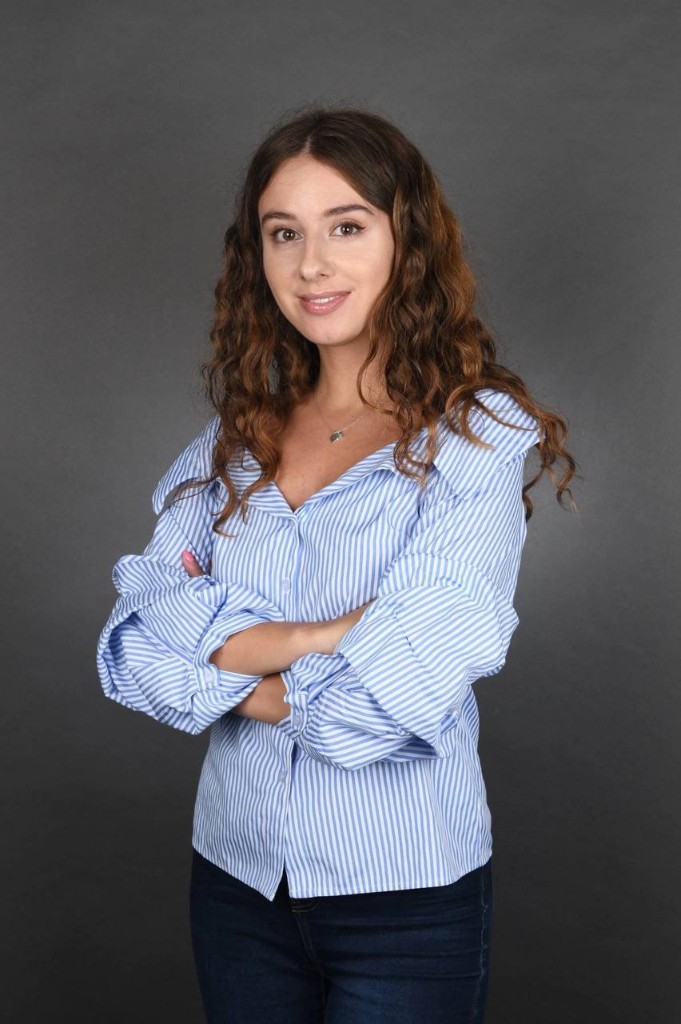
Maria Lobanova is the founder and CEO of Interstellar Digital, a deep tech PR and marketing firm whose clients include zkSync, XProtocol, Ankr, Synternet, and Propy. A former journalist who wrote for GQ and Inc. Magazine, she moved into crypto full-time in 2016 and has since become the person founders call when complicated technology needs to make sense to the wider world.
We asked Maria about storytelling, running a global agency, and how she really uses stablecoins when invoices, retainers, and contractor payments cannot wait on bank timelines.
Q&A
In conversation
SwiftFi spoke with Maria about journalism, a decade in Web3, and the unglamorous paperwork that keeps cross-border work from falling apart.
Tell us more about yourself and what made you venture into PR for the tech industry?
I started in journalism, writing for GQ and Inc. Magazine, where I learned how a story is built and why readers stay with it. In 2016, I moved into crypto full-time, and the pace was unlike anything else: within a few months, I went from copywriter to PR director at a venture fund. Since then, founders have called me when a complicated technology needs to make sense to the wider world.
Today I'm the Founder and CEO of Interstellar Digital, a deep tech PR and marketing firm. Our clients include industry leaders like zkSync, XProtocol, Ankr, Synternet, and Propy. I was also CMO of Naoris Protocol, where I led the communications around its citation in the SEC.gov submission on the Post-Quantum Financial Infrastructure Framework. It was the first time a decentralized protocol was named as a reference model in a U.S. regulatory context.
I contribute to Bitcoin Magazine, HackerNoon, and other media. I've produced events from the Cryptospace conference in 2017 to the Vailiens (Vail VR / AEXLAB) party at Faena Forum in 2021, private investor dinners with top-tier funds in the industry such as Coinbase Ventures, CoinFund and Pantera Capital, the Gam3rs' Choice Awards in 2023, a Crypto Gala during Bitcoin Conference 2022, and a WEF Davos breakfast with Google's CISO in 2025. I also speak at Boston Blockchain Week, the Futurist conference, DevConnect Argentina, DNA House, and NFT NYC.

What's been the thread that's kept you in this space for a decade?
The sense that something new is being built. In traditional industries, careers move slowly, but here, if you're willing to learn, you can take on real responsibility early. The industry has gone through cycles, and plenty of projects have failed, yet a new market keeps forming, and there's always something new to learn. The other thread is the work itself: finding a simple, human way to explain a complicated innovation, whether it's a wallet, a cybersecurity protocol, or a gaming device. That problem never gets old.
What's your winning formula for getting a crypto project taken seriously by mainstream media?
Think like a journalist, not like the client. A journalist asks why a reader should care right now, so I look for the angle: a trend, a strong number, an interesting person, a conflict. Then I keep the pitch short and lead with the problem the company solves, not with the token or the word “revolutionary.” The other ingredient is proof from outside the company. When Naoris was cited in a U.S. SEC submission, mainstream outlets could trust that story. And I pitch each story in the language of the outlet: BOLTS Technologies was a post-quantum cybersecurity story for business and tech press, and that framing is how similar work has reached Forbes, Nasdaq, and Yahoo Tech.
What would you tell women freelancers and founders who feel overlooked in tech?
Honestly, you often have to prove more before people take you seriously, and it's tempting to take that personally. What works is making your work impossible to ignore: real results, named clients, numbers you can show, and being visible in the rooms where decisions are made. Don't wait to be invited. Speak, write, publish your results, and host your own dinner if nobody asks you. Find people who open doors and open some for others. And charge what the work is worth, because underpricing earns less respect, not more clients.
What's the biggest headache you've seen founders and freelancers face when running a global business?
Getting paid, and everything left unwritten. Clients and contractors in different countries mean different banks, fees, currencies, and time zones, so a simple invoice can take weeks to become money. The second headache is unclear scope, because people from different cultures assume different things. My fix is boring: contracts that spell out deliverables, retainers paid monthly in advance, and a clear approval process. Most problems I've seen weren't about the work. They were about expectations nobody wrote down.
If you could give one piece of advice to someone just starting as a founder or freelancer today, what would it be?
Choose fewer clients and know them deeply. It's tempting to say yes to everyone at the start, but the best work and the best referrals come from understanding a client's business better than they expect. And before you talk about price, ask what business problem you're solving. The budget should follow the objective, not the other way around.
How do you actually use stablecoins day to day? Getting paid, paying your team, or something else?
Mostly for cross-border payments. Many crypto clients prefer paying in stablecoins, and some of the people I work with are in other countries, where a stablecoin transfer can arrive in minutes instead of days and cost less than a wire. I also know the product side; I led go-to-market for a multichain stablecoin wallet. But I'm not a purist: I still use traditional banking for taxes and accounting. A stablecoin is a tool, useful when money has to cross borders quickly. The rest of the time I want boring, reliable finance.
Like Maria, more and more founders and freelancers work with clients and teams across borders, and getting paid shouldn't be the hardest part. With SwiftFi, you get a virtual US account that accepts ACH and wires, with payments converted to stablecoin. No chargebacks, just one flat 3% fee.
Thank you to Maria for sharing her story. Find Interstellar Digital at interstellardigital.io.